It’s no secret that we have a reading crisis in the U.S., but we also have something else: brilliant, bold leaders who are working to change the future for children every single day. In the United States, education leaders are reimagining the way kids learn to read in real time, and many Black literacy advocates, educators, and activists are leading the charge.
Equity and opportunity gaps play a major role in exacerbating reading challenges nationwide, but the vital work of Black literacy innovators is helping to close those gaps for good, transforming the ways schools and districts meet the needs of their students, and getting us closer to a world where every child has access to the education and support they need to become a proficient reader and a thriving lifelong learner.
In honor of Black History Month, we’re tipping our hats to some of the influential Black Americans who are leading the charge on early literacy reform.
Here are 8 educators and advocates whose work is changing the landscape of literacy education for U.S. students.
Why Black Literacy Leadership Matters for Our Students
The educators featured here aren’t just shaping literacy education broadly. Their work has profound implications for the future of early literacy instruction.
From Dr. Burk’s implementation of literacy legislation in Mississippi to Dr. Muhammad’s framework for identity-affirming instruction, these leaders have shown us that effective early literacy work must address both the science of how children learn to read and the systemic barriers that prevent equitable access to that instruction.
For districts implementing early literacy intervention programs, the insights from these leaders help answer critical questions:
- How do we ensure our intervention reaches multilingual learners effectively?
- How do we create instructionally coherent systems where intervention reinforces, rather than conflicting with, core instruction?
- How do we build teacher confidence in evidence-based practices while honoring students’ cultural and linguistic backgrounds?
The common thread throughout their work is this: Early intervention isn’t just about catching students up. It’s about creating systems where every child has access to the instruction they need to become confident, proficient readers.
1. Dr. Kymyona Burk
Kymyona Burk, Ed.D., is a senior policy fellow for early literacy at ExcelinEd, but you might also know her for the vital role she played in literacy education reform in Mississippi.
Burk served as State Literacy Director for the Mississippi Department of Education from 2013-2019, during which she led the implementation of Mississippi’s Literacy-Based Promotion Act, a system of new and effective literacy programming that dramatically changed outcomes for students across the Magnolia state.
Mississippi went from being ranked the second-worst state for 4th grade reading in 2013 to ranking ninth in the nation in 2024. The rapid improvement during this time period has come to be known as the “Mississippi Miracle,” and much of it took place during Burk’s tenure.
Now, Burk supports state leaders across the country in building new or improving existing K-3 reading policies. Her passion combined with her skill in implementing policy and transforming educational approaches makes her a vital leader in the fight to improve literacy education.
2. Kareem Weaver
Kareem Weaver is an award-winning educator, a community advocate, a literacy expert, and the Co-Founder & Executive Director of FULCRUM (short for Full and Complete Reading is a Universal Mandate), a national literacy nonprofit that advises school systems and state departments of education on how to improve early literacy instruction in the service of improving access for all students.
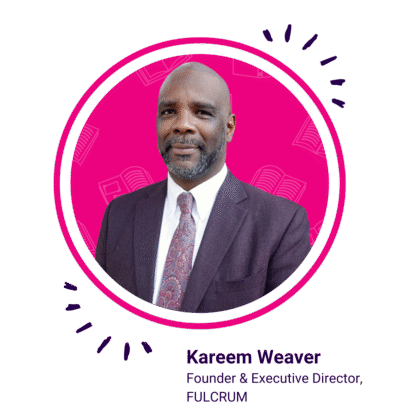
A former teacher and later principal, Weaver is prominently known for his role as a leading voice in the evidence-based literacy instruction movement. He and the FULCRUM team also played a pivotal role in addressing the reading crisis in Oakland, California, and in encouraging the Oakland Unified School District to adopt new curricula grounded in the Science of Reading.
Weaver’s advocacy work is even featured in the 2023 documentary called The Right to Read.
Weaver has served as the Commissions Chair for the Oakland East Bay Alliance of Black Educators, as well as the Education Committee Chair and as Vice President of the Oakland NAACP. He was also among Ignite Reading’s earliest partners and advocates.
In every role, Weaver has been vocal about his core belief that reading is a civil right, and every kid deserves access to the right to read.
3. Dr. Gholnecsar (Gholdy) Muhammad
Gholdy Muhammad, PhD, is a John Corbally Endowed Professor of Literacy, Language, and Culture at the University of Illinois at Chicago.
A former classroom teacher and literacy specialist who turned her eyes to the world of higher ed, Muhammad is widely known for developing the framework of Historically Responsive Literacy (HRL), a pedagogical model that builds on the work of 19th century Black literary societies to encourage learning through an equal focus on academic skills, identity, intellect, and criticality.
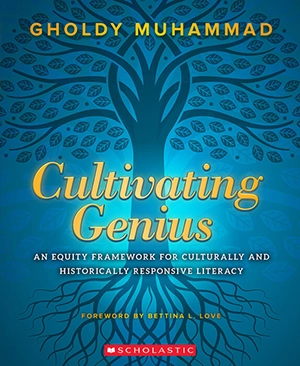
Muhammad breaks down the core tenants of this framework in her groundbreaking book, Cultivating Genius: An Equity Framework for Culturally and Historically Responsive Literacy, and expands on them in her 2023 follow up, Unearthing Joy.
Muhammad was named among the top 1% of Edu-Scholar Public Influencers in 2022, 2023, 2024, and 2025, due to her meaningful impact on education policy and practice.
4. Dr. Tracy Weeden
The word “visionary” comes to mind when you hear the name Tracy Weeden, Ed. D. Weeden is a passionate literacy advocate, founder of Upstream Education For All — an organization devoted to addressing systemic inequities in education — and the former President and CEO of the Neuhaus Education Center, who has called literacy a “human right of the 21st century.”
Over her decades-long career, Weeden has created and contributed to numerous innovative literacy programs focused on enhancing learning opportunities for students and vastly improving outcomes.
This includes serving as the executive director of academic planning with Scholastic Achievement Partners and as the assistant superintendent for curriculum, instruction, and assessment for the Houston Independent School District.
Weeden has also been passionately outspoken about reforming literacy education for students with dyslexia. In her advocacy work, she stresses the importance of community collaboration and strategic partnerships in addressing dyslexia and promoting literacy for all students.
5. Dr. Tyrone C. Howard
Tyrone C. Howard, PhD, has dedicated his career to advocating for equity, diversity, justice, and inclusion in the education space, and he’s widely considered an expert on educational equity and access in the U.S.
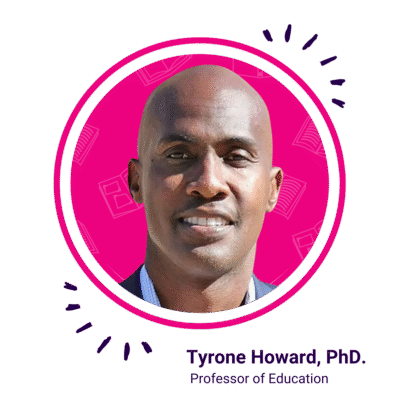
A professor of Education in the School of Education and Information Studies at UCLA, Howard started his career as a classroom teacher in California’s Compton Unified School District before transitioning to a career in higher education.
His impact on early literacy instruction in the US can be seen through his instrumental work in challenging deficit-based narratives that have historically plagued discussions of literacy achievement, particularly for students of color and those from under-resourced communities.
National assessments have long shown a pattern of lower reading scores among multilingual learners, students with dyslexia, and students from under-resourced communities nationwide. The gap between the scores of students performing at the highest levels on national tests and the scores of those performing at the lowest levels has continued to widen in recent years.
Howard’s research has played a crucial role in reframing the conversation around these disparities, establishing that these gaps are not reflective of student ability but rather of systemic inequities in access to resources, quality instruction, and educational opportunities. Building on studies that investigated schools successful in closing the achievement gap, Howard shows how adopting greater awareness and comprehensive understanding of race and culture can improve educational outcomes.
His influence on literacy instruction is evident in his emphasis on culturally relevant pedagogy and the critical importance of representation in reading materials. Howard has demonstrated through extensive research that when students see themselves reflected in the texts they read and when instruction honors their cultural backgrounds and lived experiences, literacy outcomes improve dramatically. This perspective has influenced curriculum development, teacher training programs, and literacy initiatives across the country.
Howard is author of multiple best-selling books, including Why Race and Culture Matter In Schools and All Students Must Thrive. His 2024 book Equity Now provides a vital roadmap for how school districts, leaders, and teachers can center equity in their policies and practices.
6. Zaretta Hammond
Zaretta Hammond, M.A., describes herself as “a former writing teacher turned equity freedom fighter,” and she’s spent her career working toward a better, more literate, world for America’s kids.
Hammond’s work sits at a critical intersection: She bridges neuroscience, culturally responsive pedagogy, and literacy instruction to help educators understand not just what to teach, but how the brain learns — and how culture shapes that learning.
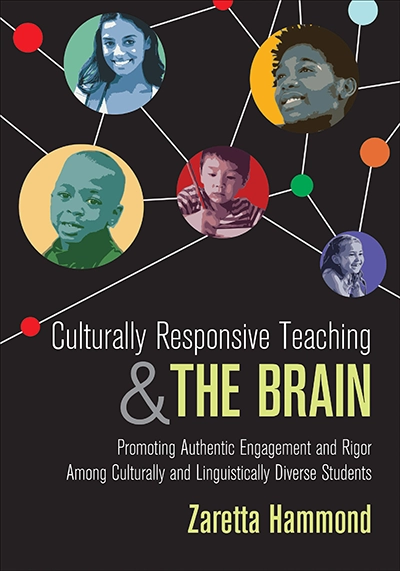
Not only does she do critical work advocating for curriculum and instructional practices that focus on the intersections between equity and literacy, but her bestselling book, Culturally Responsive Teaching and The Brain, is required reading in many school districts and teacher education programs.
In the book, Hammond lays out a set of unique, neuroscience-backed fundamentals of instruction that meet the needs of diverse students. She also supports these practices by partnering with and consulting for school districts throughout the country.
Beyond the book, Hammond actively partners with and consults for school districts throughout the country, helping translate her frameworks into actual classroom practice. Her approach directly supports Science of Reading implementation by helping educators understand the neuroscience behind how students process and retain foundational reading skills — while ensuring that instruction honors and builds on students’ cultural assets.
With her focus on making a better learning environment for all students and her special attention to both the Science of Reading and evidence-based ways kids really learn, there’s no doubt that her 25+ years as an educator and advocate has made a huge difference for countless students.
7. Dr. Julie Washington
Julie Washington, PhD, M.S., is a speech-language pathologist, researcher, and fellow of the American Speech Language Hearing Association whose groundbreaking work has fundamentally changed how educators understand the relationship between language, literacy, and reading achievement for Black children.
Washington’s research centers on a critical insight that has been overlooked or misunderstood in literacy education for far too long: the vital role that cultural dialect plays in reading achievement. Her work explores how African-American Vernacular English (AAVE) — a fully systematic and rule-governed language variety — intersects with the development of reading and early language skills, and how students’ ability to “code-switch” between AAVE and the English dialects typically used in classroom instruction can be a linguistic asset, not a deficit.
Through her research, she has also examined how cultural dialect impacts the assessment and identification of reading disabilities — challenging systems that have historically misidentified or underidentified Black children based on language differences rather than actual learning needs. By distinguishing between language variation and language disorder, Washington’s research helps ensure that students receive appropriate support based on their actual instructional needs.
Washington is currently a professor in the School of Education at the University of California, Irvine.
Dissecting Dyslexia
While experts estimate one in five Americans have dyslexia, a number of studies have found that students of color — particular Black students — are underidentified for learning disabilities like dyslexia.
Penn State researchers who examined this disparity in 2015 surmised there were a number of reasons so many Black students do not receive a learning disability diagnosis, including fewer interactions with health professionals, limited access to information about disability conditions in their communities, and poorly resourced schools “where only students with very low levels of school functioning are evaluated.”
8. Dr. Alfred W. Tatum
Alfred W. Tatum, PhD, is not only a nationally recognized scholar, but also one of the leading authorities on advancing literacy development for Black youth, especially young males.
During his 20+ year career in literacy and higher education, Tatum has supported Black youth by hosting the African American Male Summer Literacy Institute which nurtures male writers, and developing the Pre-College Leadership Impact Program to help recruit Black men to the teaching profession.
Tatum has also made a name for himself as a vocal proponent of meaningful text engagement, encouraging educators to engage students with texts they find meaningful and that reflect their experiences as a way of supporting deeper learning.
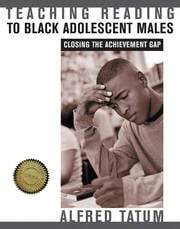
Currently, Tatum works as a professor in the School of Education at Metropolitan State University of Denver, and he has authored four books, including the award-winning Teaching Reading to Black Adolescent Males: Closing the Achievement Gap.
He also established and serves as the Executive Director of the Literary Research Center and Clinic, a statewide resource for literacy support, screenings, and research at MSU Denver.
Moving Forward Together
The educators highlighted here represent just a fraction of the Black literacy leaders whose work is transforming reading instruction across the United States.
From policy implementation to culturally responsive pedagogy, from neuroscience-backed teaching methods to advocacy for students with dyslexia, these educators have shown us that solving the literacy crisis requires both rigorous adherence to evidence-based practices and deep commitment to educational equity.
Their work reminds us that the Science of Reading isn’t just about phonics and phonemic awareness — it’s about ensuring that every child, regardless of their background, has access to the high-quality literacy instruction they deserve. When districts adopt evidence-based early literacy intervention, they’re building on the foundation these leaders have laid.
There are countless Black educators, researchers, and advocates whose work is changing the landscape of literacy education and shaping a brighter future for kids. We encourage you to learn more about these leaders, read their work, and consider how their insights can strengthen literacy instruction in your own community.
Learn More — Books & Other Resources
Want to dive deeper into the work of these literacy leaders? Here are the books and organizations mentioned in this post:
Books
- Cultivating Genius: An Equity Framework for Culturally and Historically Responsive Literacy by Dr. Gholnecsar Muhammad
- Unearthing Joy. by Dr. Gholnecsar Muhammad
- Culturally Responsive Teaching and The Brain by Zaretta Hammond
- All Students Must Thrive: Transforming Schools to Combat Toxic Stressors and Cultivate Critical Wellness by Dr. Tyrone C. Howard
- Equity Now by Dr. Tyrone C. Howard (2024)
- Teaching Reading to Black Adolescent Males: Closing the Achievement Gap by Dr. Alfred W. Tatum
Organizations
- FULCRUM Literacy (Co-founded by Kareem Weaver) — National literacy nonprofit focused on evidence-based literacy instruction
- Upstream Education For All (Founded by Dr. Tracy Weeden) — Non-profit organization devoted to addressing systemic inequities in education
- Literary Research Center and Clinic at MSU Denver (Founded and directed by Dr. Alfred W. Tatum) — Research center at Metropolitan State University in Denver
- ExcelinEd — Policy think tank where Dr. Kymyona Burk currently serves as senior policy fellow for early literacy
Additional Resources
- The Right to Read — Documentary featuring Kareem Weaver’s advocacy work in Oakland