There’s no doubt that women have shaped modern literacy instruction in profound ways. Through research, advocacy, and teaching, women in reading science have transformed our understanding of how kids actually learn to read.
Whether it’s laying the foundation for the Science of Reading to or working to advance education about dyslexia, the women listed below have helped make reading possible for millions more kids.
What better way to mark the occasion than by uplifting the work of these groundbreaking researchers who continue to positively influence schools, policies, and children all over the country?
Why the women of reading science are so important
Literacy is complex. It can’t be boiled down to a single study or a single method that works for every child.
Instead, reading science is a body of interdisciplinary research developed over decades. And each of the women on this list — along with their colleagues, the educators who came before them, and the educators who will carry on their important work in the future — has played a major role in helping kids develop the foundational reading skills that last a lifetime.
Thanks to them, millions of students have greater access to effective reading instruction, and so many more educators have accurate and meaningful models to support them in helping their students achieve their goals.
Let’s meet some of the women of reading science who’ve changed the game.
1. Dr. Maryanne Wolf
Dr. Maryanne Wolf is a global advocate for children and literacy, as well as the founder and director of the Center for Dyslexia, Diverse Learners, and Social Justice at the UCLA Graduate School of Education and Information Studies.
Notably, Dr. Wolf co-authored the Rapid Automatized Naming and Rapid Alternating Stimulus (RAN/RAS) naming speed tests with fellow researcher Martha Denckla. These assessments are considered the gold standard for measuring how quickly a child can recognize a visual symbol such as a letter or color, and they’re used as a means for predicting dyslexia around the world.
Dr. Wolf is also the author of more than 160 scientific articles and has won several awards for her research, including the Norman Geschwind and Samuel Orton Awards (the highest honors from the International Dyslexia Association).
Her efforts have played a major role in helping educators to support readers of all levels, especially those with dyslexia.
In 2020, Dr. Wolf’s work earned her an honor rarely bestowed on female scientists — she was named to as a permanent member of the Pontifical Academy of Sciences, a group of 80 scientists from around the world called on to advise the Vatican. Appointed by the pope for their contributions to science rather than religious affiliation, members serve for life and provide “authoritative advice on scientific and technological matters” to the Holy See.
For your book shelf
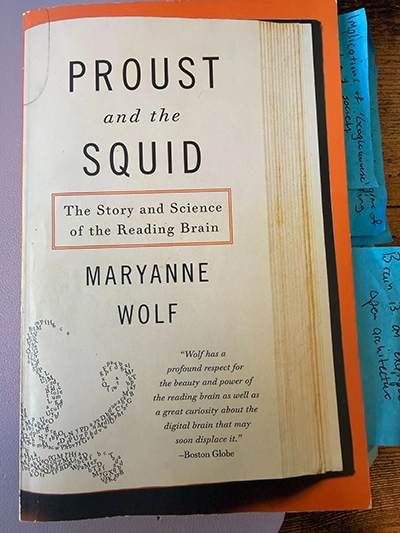
When we asked literacy educators to share their must-read books for better understanding the Science of Reading, Wolf’s Proust and the Squid: The Story and Science of the Reading Brain landed right near the top.
2. Dr. Jan Hasbrouck
Dr. Jan Hasbrouck is an educational consultant, researcher, and author who works nationally and internationally to help schools design effective literacy programs. A former reading specialist and literacy coach, she’s contributed extensive research on reading fluency and reading assessment to the Science of Reading.
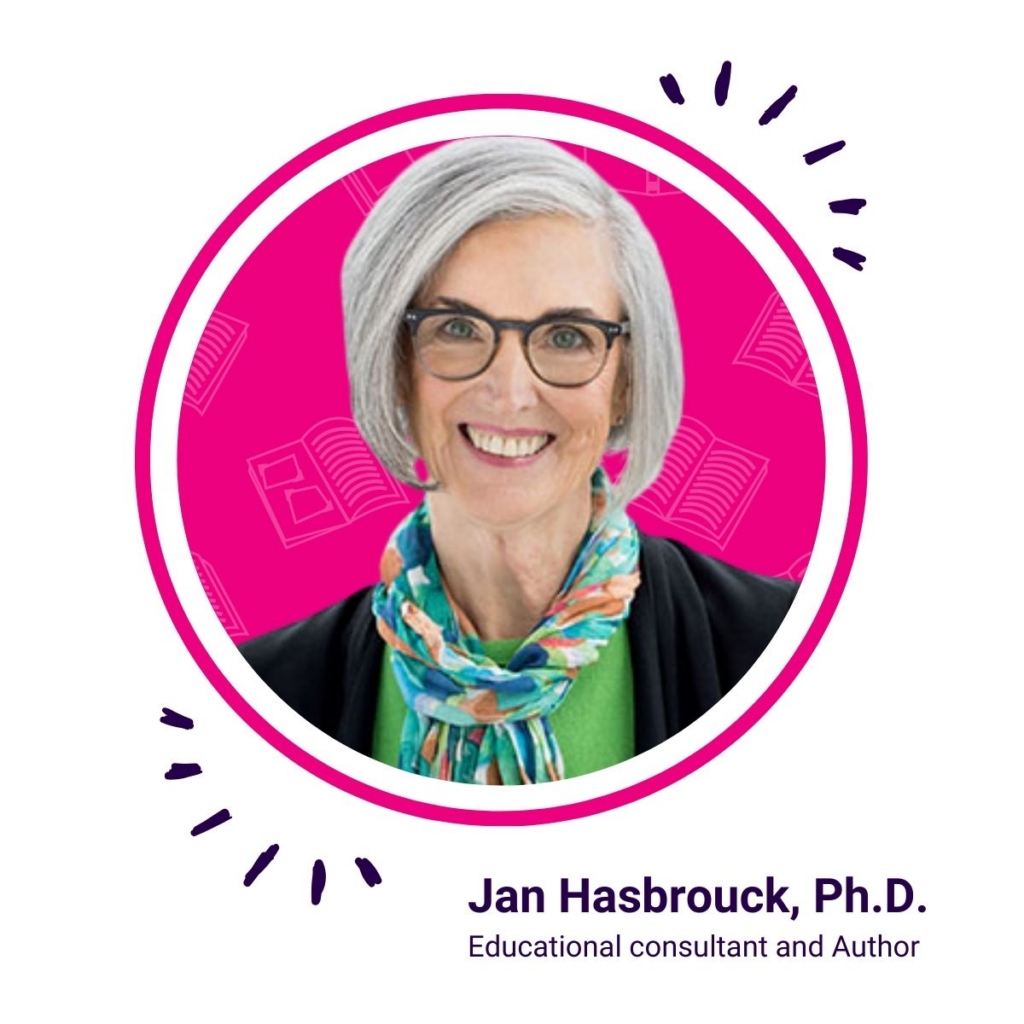
Together with Dr. Gerald Tindal, Dr. Hasbrouck helped create a gold standard metric for assessing students’ oral reading fluency (ORF) that bears her name. The Hasbrouck-Tindal Oral Reading Fluency Chart provides educators with benchmarks for measuring students’ words correct per minute (WCPM) at the beginning, middle, and end of the school year in grades 1 through 8.
The chart has given educators across the U.S. key insights to better identify reading skills gaps early, providing intervention before they widen.
In addition to her work in student literacy assessment, Hasbrouck has helped restructure literacy curriculum all over the U.S. as the executive consultant to the Washington State Reading Initiative, an advisor to the Texas Reading Initiative, and as an author of reading and intervention programs for McGraw Hill publishers.
In 2019, Dr. Hasbrouck helped co-found Read Washington, a non-profit devoted to providing professional development opportunities for educators based on the Science of Reading. Her passionate advocacy and experience as an educator make her a vital asset to the early literacy community nationwide.
3. Dr. Linnea Ehri
Dr. Linnea Ehri is a Distinguished Professor Emerita of Educational Psychology at The Graduate Center of the City University of New York, an educational psychologist, and an award-winning expert on the development of reading.
Focused on the psychological processes and sources of difficulty in learning to read and spell, Ehri’s research explains the concept of orthographic mapping, which describes how learners form “letter-sound connections to bond the spellings, pronunciations, and meanings of specific words in memory.”
She’s also known for Ehri’s Phases of Word-Reading, a theory that’s helped educators around the world understand the different phases children move through on their way to proficient reading.
In 2022, Ehri’s work earned her the William Gray Citation of Merit from the International Literacy Association (ILA), a prestigious award that recognizes outstanding contributions to literacy development.
4. Dr. Hollis Scarborough
Dr. Hollis Scarborough is a senior scientist at Yale University’s Haskins Laboratories in New Haven, Conn. A psychologist and legendary literacy researcher, Dr. Scarborough has contributed significantly to the Science of Reading.
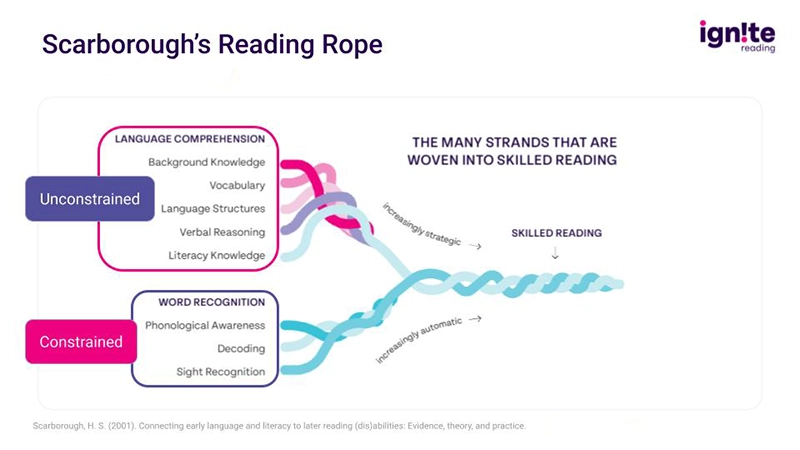
Most notably, she created Scarborough’s Reading Rope, a visual model that uses the strands of a frayed rope to illustrate the important relationship between language comprehension and word recognition skills for students who are learning to read.
Scarborough’s Reading Rope complements the Simple View of Reading in illustrating how interconnected early reading skills are. Adding in sub-skills, the rope goes one step further to help educators understand how those sub-skills combine to support learning to read.
Additionally, since 1981, she has authored and co-authored more than 40 research papers that provide us with a window into the way students best learn to read.
5. Dr. Nancy Young
Dr. Nancy Young is an educational consultant based in British Columbia, Canada and an international expert on evidence-based teaching approaches in reading, spelling, and writing.
Dr. Young has been instrumental in helping educators around the world better understand both why students require varying levels of support in order to learn to read fluently and how to differentiate instruction to accommodate those different learning needs.
Dr. Young created The Ladder of Reading and Writing, a visual representation of the varying levels of ease with which different children learn to read and write. The ladder breaks these levels down into four distinct groups of students based on decades of research into how different kids learn to read.
6. Dr. Maryellen MacDonald
Dr. Maryellen MacDonald is an author, researcher, and former Donald P. Hayes Professor of Psychology at the University of Wisconsin-Madison. She specializes in psycholinguistics, or the study of how humans use, learn, and understand languages, and has made significant contributions to our understanding of the ways speech and reading intersect.
Dr. MacDonald has been involved in a number of influential studies that fall within the body of research we call the Science of Reading, including a groundbreaking 2018 study conducted with psycholinguistic specialist Mark Seidenberg that showed children whose spoken language is more advanced are likely to learn to read more easily than their peers.
More than words
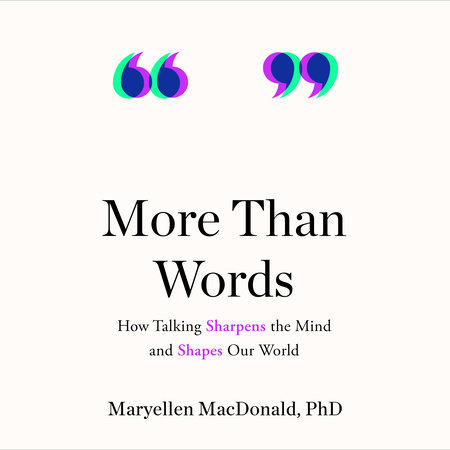
Dig more into Dr. MacDonald’s work in her book More Than Words: How Talking Sharpens the Mind and Shapes Our World. It highlights several of her most impactful findings, including the ways language and conversation are vital to the development of reading skills in the classroom.
7. Dr. Sharon Vaughn
Dr. Sharon Vaughn is the Manuel J. Justiz Endowed Chair in Education and Executive Director of The Meadows Center for Preventing Educational Risk at The University of Texas at Austin. She’s also an award-winning researcher and a reading and special education expert whose work has made a big impact on our understanding of how to support early readers and improve literacy instruction for students with learning disabilities.
Dr. Vaughn has authored more than 35 books and 250 peer-reviewed research articles that address issues related to literacy research and learning problems. Perhaps her most well-known work is her research into and advocacy for 1st grade literacy skills.
In studies that involved thousands of kids across 10 different states, her research has supported the effectiveness of using early literacy intervention to target and improve foundational reading skills for young readers. The results bolstered her position as an advocate for evidence-based Science of Reading instruction in 1st grade that emphasizes explicit, systematic, and interactive methods of instruction.
Notably, Dr. Vaughn became the first woman to receive the Research Excellence Award at the University of Texas for this work.
8. Jeanne Chall
Dr. Jeanne Chall was a true pioneer in early literacy. A Harvard professor, psychologist, reading researcher, and the founder of the Harvard Reading Laboratory (now known as the Jeanne Chall Reading Lab), Chall may be best known for outlining the Stages of Reading Development.
Based on her extensive research into children’s development, the six stages provide a sequential framework that explains the steps a child goes through when learning to read, from birth all the way through their teens. Her framework continues to help shape educators’ understanding of how people actually learn to read.
Dr. Chall was also among the first to delve into the ways that poverty and disability can impact literacy, and she spent her career advocating for children to have access to better supportive services. Highly sought after for her expertise on the subject of reading development, Professor Chall served as an advisor on a number of children’s most beloved educational TV shows, including Sesame Street and The Electric Company.
Dr. Chall died in 1999, but her impact on remains a famous name in literacy education and her work continues to impact the way educators teach reading and address reading gaps today.
9. Dr. Elsa Cárdenas-Hagan
Dr. Elsa Cárdenas-Hagan is a bilingual speech-language pathologist, author, and internationally recognized expert in literacy instruction for multilingual learners.
Her work centers on the reality that multilingual learners benefit from the same explicit, systematic instruction in foundational skills that all students need with thoughtful adaptations that honor their linguistic assets. Dr. Cárdenas-Hagan grew up speaking Spanish — her mother is Spanish and her father came to the U.S. from Mexico — and she brings her lived experience as a bilingual child to her research and to her work spreading awareness of the value of embracing students’ home languages.
As founder of the Bilingual Special Education program at The University of Texas Health Science Center at Houston, Dr. Cárdenas-Hagan has trained thousands of educators in structured literacy approaches for multilingual learners.

Measuring growth
Dr. Cárdenas-Hagan’s book Literacy Foundations for English Learners: A Comprehensive Guide to Evidence-Based Instruction, also landed on the list of must-reads for building understanding of the Science of Reading. In it, she lays out a path for educators to address the critical question: How do we teach foundational reading skills while students are still developing English language proficiency?
10. Dr. Susan M. Smartt

Susan M. Smartt, Ph.D., is known in the literary world for her leadership in aligning the Science of Reading with practical, classroom-ready interventions.
Dr. Smartt is a former senior research associate at the National Comprehensive Center for Teacher Quality at Vanderbilt University who has devoted her career to improving teacher preparation in reading. She is a passionate advocate for school reform and the co-author of the book Next Steps In Literacy Instruction: Connecting Assessments to Effective Interventions.
In the book, Dr. Smartt and co-author Deborah R. Glaser lay out the latest reading research and models and provide a planning guide to support teachers in matching the most popular reading assessments with the right tiered interventions, strategies, and activities.
Dr. Smartt has also provided educational consulting services and teacher training to school districts nationwide that focuses on effective reading intervention for low-performing schools and implementing evidence-backed literacy programs.