The Challenge
When Superintendent Dr. Jermall Wright arrived in the Little Rock School District in 2022, he felt strongly about focusing on literacy. It was easy to see why: More than half of the 21,612 students across the 48 schools in his new district weren’t reading at grade level.
According to LRSD’s Chief Academic Officer, Melissa Gude, student learning gaps existed before the pandemic, but, she said, “the pandemic certainly exacerbated those gaps and really created additional issues with attendance and students not being in school.”
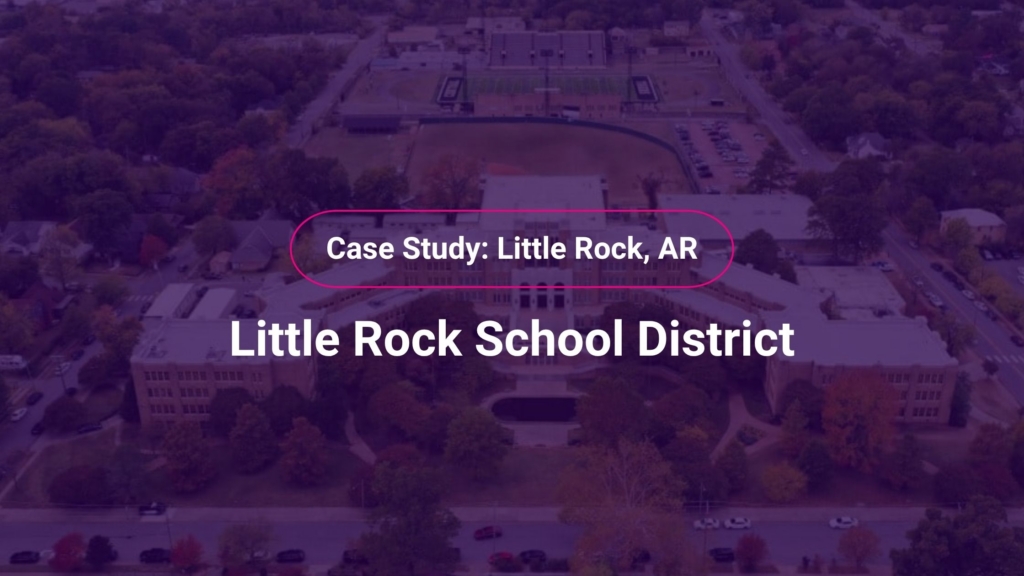
It was clear to both Wright and Gude that the district needed a significant intervention to get students caught up — and that’s where Ignite Reading’s high-dosage tutoring came in. In January 2023, the district partnered with Ignite Reading to kick off an ambitious mid-year pilot including 12 schools and 1,021 students aimed at getting LRSD students reading.

- District Partner: Little Rock School District, Arkansas
- District Size: 21,612 students
- Ignite Reading Program Participants: 1,021 students in grades 1st-5th
The Solution
Baseline Diagnostics Identified Each Student’s Gaps
Ignite Reading’s solution for the Little Rock School District started with giving every student selected for the pilot a baseline assessment to confirm that they did, in fact, need the foundational skills Ignite Reading’s program teaches.
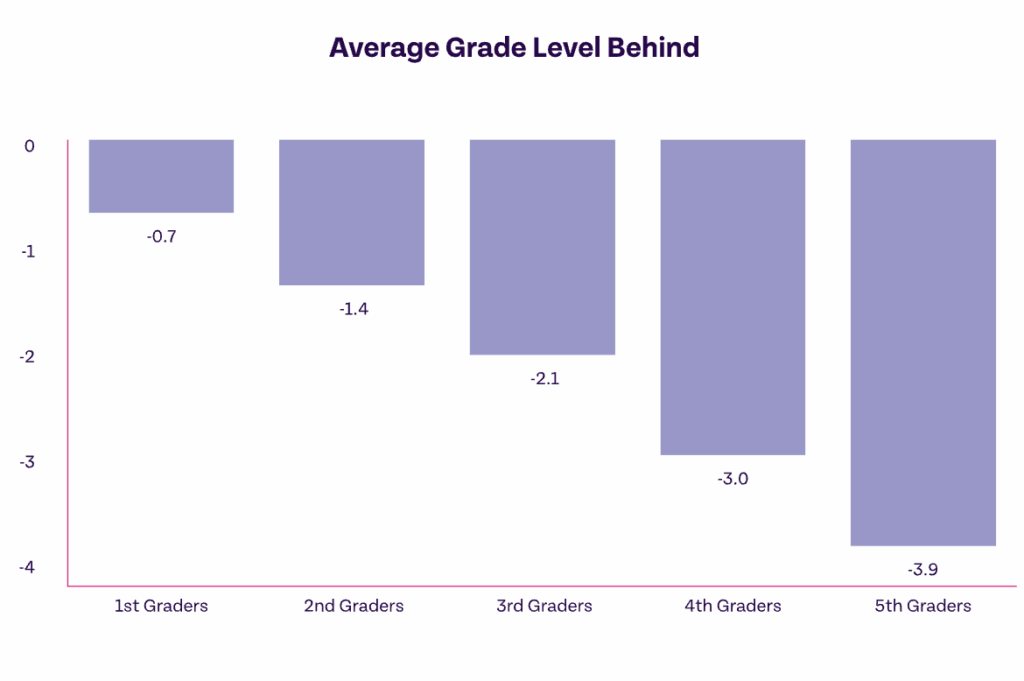
The assessment overwhelmingly confirmed the need for an intervention — pilot participants in all grades were reading well below grade level.
53% of 5th graders in the program had skill gaps that placed them at kindergarten or 1st grade reading levels.

Within each grade level, students exhibited a range of foundational skills gaps.
Tutoring Started at the Point of Each Student’s Earliest Skills Gaps
Each student was paired with one of Ignite Reading’s certified literacy tutors, and students met with their assigned one-to-one over video for 15 minutes every school day.
Students started lessons in the skill area where the baseline diagnostic placed them, and tutors taught into their precise decoding gaps to help them become fluent readers.
Tutoring Settings Adapted to Each School
Alongside assessing students, the Ignite Reading team worked with Gude and school leaders to tailor the program’s location to what worked best for each school. As every school was different —some with computer labs or laptops for each student, others with more limited space and resources — the solution had to adapt to each.
Gibbs Magnet Elementary School, for example, had a computer lab they could dedicate to Ignite Reading at various times throughout the day, so students transitioned to a designated space to meet virtually with their tutors.
At Brady Elementary School there was less available space, so the team worked out a multi-pronged solution to get students to their tutoring sessions:
- In one classroom, where 19 of the 25 students were in the Ignite Reading program, it made sense for those students to stay and do tutoring in the classroom, while the other 6 students participated in small-group instruction with their teacher at another table.
- Another approximately 40 students had their tutoring sessions just before lunch in the cafeteria, and their teachers would walk them there.
- Yet another group of students attended Ignite Reading in the library just before the school day began, with a bus drop-off that delivered them to their sessions.
Partnership Was Key
At every school, Ignite Reading ensured there was an “Ignite Reading Champion” in place, a staff member whose role it was to coordinate between other staff members and the Ignite Reading team, help find space for tutoring sessions, and make sure students had what they needed.
Ignite Reading Champions also ensured there were staff monitors in each tutoring setting to help kids get in front of their computers, get their headphones on, and log in to their 15-minute sessions.

Ready for 2nd Grade
When Bella, a 1st grade student at Martin Luther King Jr. Elementary School, started the Ignite Reading program in January 2023, her reading skills were half a school year below grade level. With a 91% attendance rate, she was able to make up that deficit and then some—in just 7 weeks of Ignite Reading tutoring, she mastered a full year of foundational reading skills, putting her solidly on grade level and ready to start second grade!
A Literacy Specialist for Every Student
Tutors collected data on student progress and skills gaps that are presented to school leaders and teachers. Ignite Reading literacy specialists then synthesized the data and provided suggestions for students who are not making expected progress.
At the same time, Ignite Reading literacy specialists worked with school leaders and teacher teams to reinforce the connection between the reading intervention program, the Little Rock MTSS, and the district’s literacy ecosystem as a whole.
Ignite Reading’s literacy team provided all schools with individualized support. Data meetings included representatives from all 12 schools in the pilot and included both districtwide information shared with the entire group and small breakout sessions to discuss specific school challenges and individual student progress.
LRSD was strategic and intentional about how school leaders and teachers operationalized the program data, organizing a monthly professional learning community for principals to review the data and also school-specific meetings for teachers and school leaders to dive deeply into student results.
“Literacy is a civil right. Every child in the Little Rock School District (LRSD) should leave our system equipped with the skills to navigate successfully through the world. Illiteracy makes the path to economic prosperity and social mobility inaccessible. With significantly less than 50% of our students reaching reading proficiency, we needed to do something to deliver on every child’s civil right.” — Dr. Jermall Wright, Superintendent, Little Rock School District
In addition to giving teachers valuable data about students’ foundational reading skills gaps they could reinforce in the classroom, data meetings brought any challenges quickly to light. In their first data meeting, for example, the Ignite Reading team noted that attendance in the program was low across the board.
Together, the Ignite Reading team and Gude worked with school leaders in a range of ways — sending letters to parents, making sure staff monitors were getting students to their sessions, and reevaluating session timing — to increase attendance.
As attendance rates rose, students’ progress monitoring pass rates increased. “The way we were able to share data across the district and work with Ms. Gude to address challenges made our meetings so successful,” said Brittny Tennessee, the lead Ignite Reading literacy specialist working with LRSD. “It was truly a partnership.” And that partnership produced exceptional results.
The Results
By the end of the 22–23 school year, ALL Ignite Reading students had significantly accelerated their reading growth.
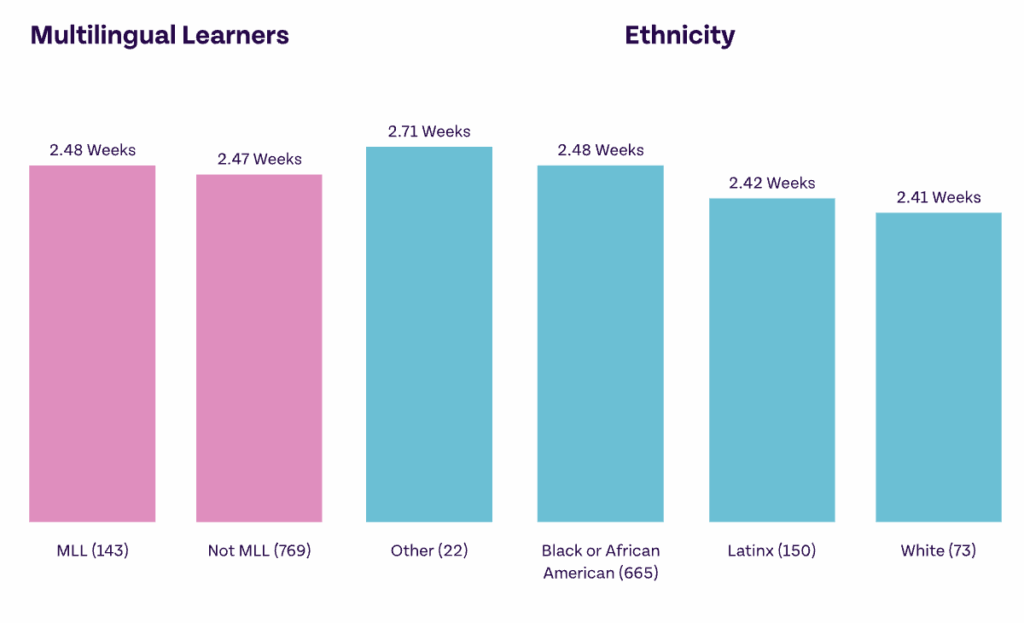
Little Rock students made an average of 2.4 weeks of reading skills growth per week in the reading intervention program.
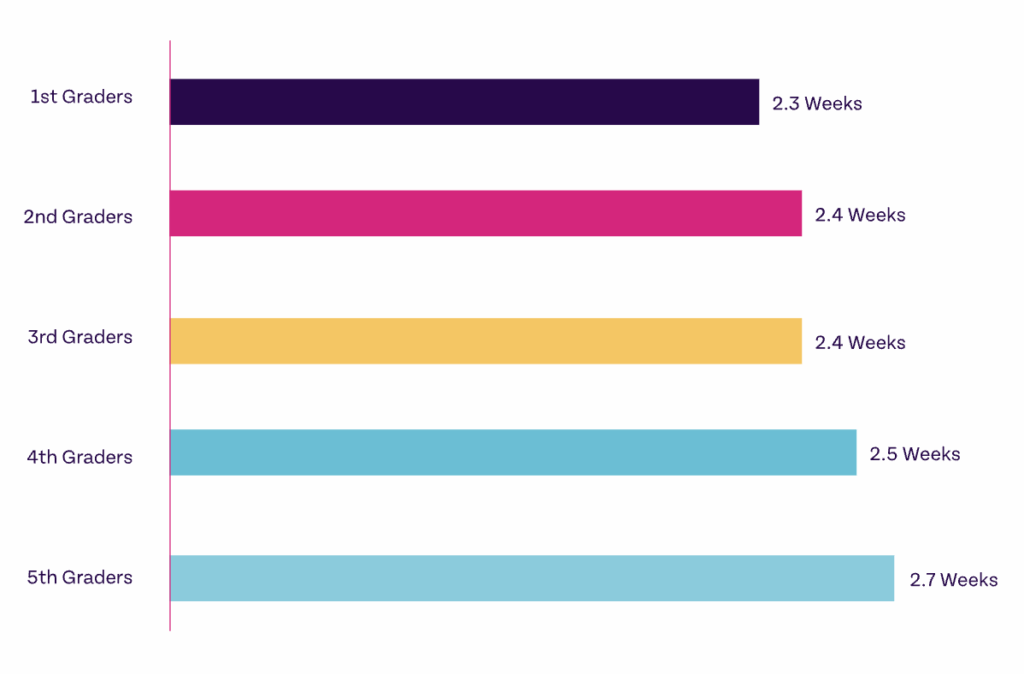
This reading advancement was consistent across students of all ethnicities and language backgrounds — there were no opportunity gaps.
Building Social-Emotional Skills
Above and beyond these impressive numbers, the social-emotional impact of the Ignite Reading program on LRSD students was significant.
Students loved their tutors and felt incredibly proud of the progress they were making. “Kids [were] literally running down the hall to get a chance to talk to their tutors,” Wright said. “It takes a lot for me to cry,” he went on, reflecting on one 5th grader who finally learned to read after struggling for years. “She was thankful for her tutoring partner.”
As a result of these leaps and bounds in student reading skills and confidence, the Little Rock School District more than doubled its Ignite Reading program in the next school year, expanding to 2,500 students across 22 schools.

As Wright explained, “We need partners like Ignite Reading to help us deliver on every child’s right to read.”