Richmond Public Schools has made a “big bet” on literacy, and it’s paying off.
As Superintendent Jason Kamras revealed in his recent 2025 state of the schools address, “Over the last two years, reading is up six points, math is up five points, science is up 12 points, and history is up seven points. That is not easy to do … Our economically disadvantaged students are growing in reading five times faster than their peers across the state.”
With more than 21,000 students, the school division serving Virginia’s capital city is one of the largest in the state, and it’s quickly becoming a district to watch thanks to its literacy leadership.
What’s the secret driving literacy gains in Richmond? And what can districts across the country borrow from the Richmond Public Schools playbook?
We sat down with Cassandra Bell, M.Ed., director of curriculum and instruction for Richmond Public Schools (RPS), to learn more about the the RPS “Passion4Literacy.”
The “Passion4Reading” initiative
“Superintendent Kamras really got invested in literacy, and he made it his personal mission to ensure that when we were working on adjusting and updating our strategic plan literacy was one of our primary focus areas,” Bell notes.

What Kamras has described as a “moonshot effort to ensure 100% of our students learn to read proficiently and joyfully by the end of 3rd grade” was added to Richmond’s Dreams4RPS strategic plan in 2024 and dubbed the Passion4Reading.
To get there in the next five years, the plan outlines a division commitment to:
- Comprehensive and ongoing training, led by RPS literacy coaches, on [the division’s] evidence-based literacy curricula
- Classroom observation and feedback cycles focused explicitly on enhancing teachers’ skill with evidence-based literacy instruction
- Family workshops to help parents and caregivers learn evidence-based strategies to support their students’ literacy development at home
- Investment in home libraries for families of preschool-3rd grade students
- Increased compensation for expert reading teachers serving in [the division’s] highest needs schools
Although the initiative is relatively new to RPS, prioritizing literacy improvement isn’t — the urban division has been leading the way on the literacy front for the better half of a decade.
The foundation: starting before the pandemic
As states across the country have rolled out mandates requiring districts to use evidence-based curricula to teach kids how to read, many districts have been forced to scramble to keep up with the required change.
But Richmond’s literacy journey didn’t begin with a crisis or a mandate — it started with intentional planning and a commitment to evidence-based practices.
“I’ve been with Richmond for seven years, and since I’ve been here, we’ve been really focusing on literacy, even before the shift at the state level to Science of Reading research and the implementation of the [Virginia] Literacy Act,” Bell explains.
The district began implementing both a new math and a new reading curriculum during the 2019-2020 school year, nearly three years before the Virginia Literacy Act (VLA) was passed in 2022.
“Overwhelmingly, we understood that we wanted to adopt curricula aligned to the Science of Reading, and just make sure that it was really grounded in research,” Bell recalls. “We finished the adoption and everything, probably around the end of February, beginning of March.
“And then, we went out for spring break, and we thought we were gonna be out for an extra week, and you know what happened,” she says with a laugh.

Measuring growth
According to data from the Virginia Department of Education, the reading test scores of Richmond’s students who are categorized as economically disadvantaged climbed 10 points. During that same time period, their peers across the state saw only a two point improvement. RPS also saw literacy growth from their multilingual learners who outperformed their counterparts in surrounding counties and across the Virginia on the annual Standards of Learning (SOL) test.
Turning crisis into opportunity
Rather than shelving their new curriculum when the pandemic shuttered schools, Richmond made a bold decision.
“What we thought about was, how do we roll out this really rich, really deep curriculum for our teachers in a virtual space. Should we wait a year? Should we implement now? What should we do? And we decided at that time that we would implement virtually,” Bell recalls.
Despite its (obvious) challenges, the virtual environment created unexpected opportunities for professional development. The district adjusted the EL Education literacy curriculum — implementing three modules instead of four — and focused intensively on teacher training.
“What we were able to do in that virtual year was really provide our teachers with some really rich and deep professional learning. It was ongoing, continuous, and it provided them an opportunity to just get acclimated to the curriculum in this virtual space without the pressure of full implementation the first year,” Bell explains.
The approach included both synchronous and asynchronous options, allowing teachers to “engage with at their own pace, in their own time, to get comfortable with the curriculum.”

Curriculum review
Richmond Public Schools adopted EL Education to serve as a comprehensive literacy curriculum for K-8 during the 2019-2020 school year.
The district later opted to add on another layer to support foundational skills instruction, first piloting UFLI Foundations in select schools during the 2023-24 school before rolling out across all K-2 classrooms the following year.
Building a literacy-first culture from the top down
Investment in professional development didn’t stop at the teacher level.
One of Richmond’s key strategies has been ensuring that literacy expertise permeates every level of leadership. That’s meant creating opportunities for ongoing learning and collaboration across the division.
Cross-departmental collaboration: breaking down silos
RPS recognized early that literacy isn’t just the responsibility of the reading teachers and literacy specialists. It requires coordinated effort across multiple teams.
“We’re not just doing it in the Department of Curriculum Instruction, but really leaning in and connecting with my colleagues in the Department of Exceptional Education, my colleagues in the Department of what’s now called Multilingual Learner Success,” Bell explains.
The goal? Ensuring everyone speaks the same language — literally.
“We did some initial training on my team with each of those departments before we ever came together to provide any training to the staff,” she says.
The result was “a show of cohesion across departments so that our administrators see us together, our administrators see our specialists together in schools, and we’re having these common conversations.”
“Even if they are departmentalized and they don’t teach literacy directly, we still want to make sure that they have a deep understanding, because literacy impacts every single content area,” — Cassandra Bell, M.Ed., director of curriculum and instruction

The division is constantly on the look-out for cross-functional communication barriers that can be removed in service of improving their literacy ecosystem.
One example came two years ago when they division realized there were no common opportunities for literacy coaches and principals to meet together.
“So last year, we started with these monthly Passion4Reading sessions that were all about the Science of Reading, all about the reading structure, and it’s been very impactful,” Bell says. “We also then started adding in sessions for assistant principals and reading interventionists, so that they would also have that common understanding.”
A structure for principal development
Richmond’s principals also meet monthly in what the division calls “clusters,” coming together for a day of professional development.
RPS has taken advantage of those clusters to help build principals’ understanding of the Science of Reading, even expanding its traditional one-hour time slot for Bell’s department to two hours dedicated to literacy professional learning.
Keeping instruction quality high
Richmond has faced the kinds of staffing challenges familiar to district leaders across the US, and that’s meant cobbling together classroom coverage with rotating subs, long-term subs, and even some annual subs.
Rather than accepting that some students might receive inferior instruction, Richmond doubled down on quality and consistency. “Students can’t be the recipients of poor instruction, and it’s not their fault. So we want to make sure that what we’re providing to all of our students is quality instruction,” Bell says firmly.
The solution?
Comprehensive training for everyone — even those substitutes.
“We have provided training to all of our staff, whether long-term subs, or whether, you know, new teachers or veteran teachers, this training to ensure they know how to properly implement those routines found in UFLI,” Bell says, describing the division’s foundational reading skills curriculum for K-2.
RPS & Ignite Reading
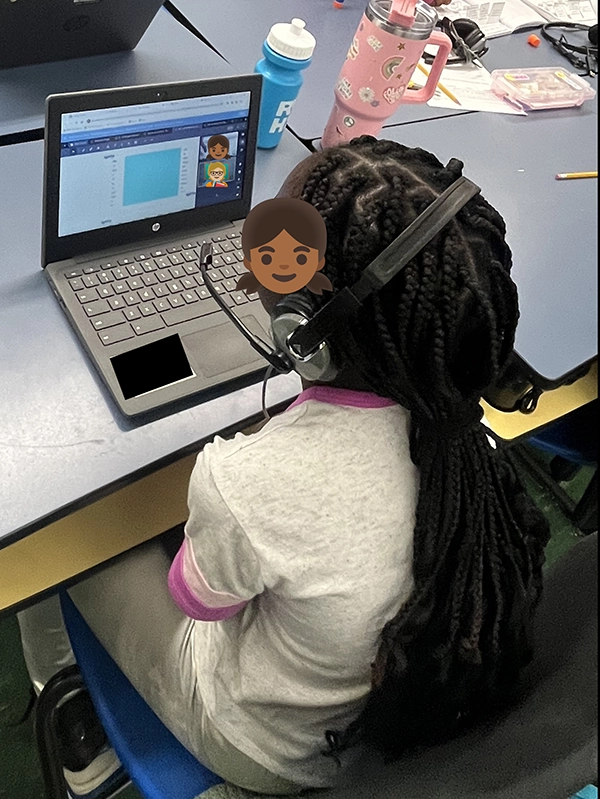
After a partial year partnership with Ignite Reading during the 2024-2025 school year, provided 600 students with a dedicated tutor delivering daily targeted instruction, Richmond Public Schools opted to extend its partnership to the full 2025-2026 school year.
“The Ignite Reading tutors have truly made an impact,” Janet Johnson, a teacher at Richmond’s Fairfield Court Elementary, shared during a visit to the PK-5 school. “Today I observed several of my students taking their microphase assessments, and students were asking for ‘long o v short o,’ ‘bossy e v silent e,’ ‘noun or verb,’ and so much more. Even the way they are able to articulate their thinking has changed.”
A signal of commitment
Perhaps the most telling indicator of Richmond’s literacy commitment came recently: K-5 literacy now reports directly to the superintendent.
The reorganization signals to the entire district that early literacy isn’t just another initiative — it’s the top priority.
Proud of the investment
When we asked Bell what she’s most proud of, Bell’s answer wasn’t the improvement in test scores, although she’s seen the division’s readers grow steadily since moving into her current role three years.
“I’m proud of the growth I’ve seen in our literacy coaches and math coaches, and I’m proud of the commitment that our principals have made to this work. They’re all very invested in literacy now in a way that I have not seen before,” she says.
Her central office team receives particular recognition. “I have the hardest working team that I’ve ever seen. They are in buildings every day, every week, really leaning in to provide the support that’s needed.”
But ultimately, Bell’s focus remains on students. “Most importantly, I’m so proud of our scholars. They are the ones who are the recipients of this work, and we owe it to them to provide them with high-quality instruction every single day.”
Her standard is uncompromising: “I say to my team, if we don’t see high-quality instruction every single day in every single classroom in our division, we’re not doing it right.”
Advice for districts just starting
For district leaders wondering where to begin, Bell’s advice is practical:
- Start with the research. “Build a foundation that is centered around the Science of Reading research. Because then it is not just your word. It’s not just your beliefs, it’s not just your thoughts, but it’s grounded in research.”
- Do a needs assessment. “Get a deeper understanding of where you are as a district.”
- Take it slow. “Don’t try to accomplish everything all at once. You’ve got to make incremental changes.”
- Celebrate everything. “Celebrate every single success, no matter how minute.”
For more information about Richmond’s literacy initiatives, explore the Division Literacy Plan.