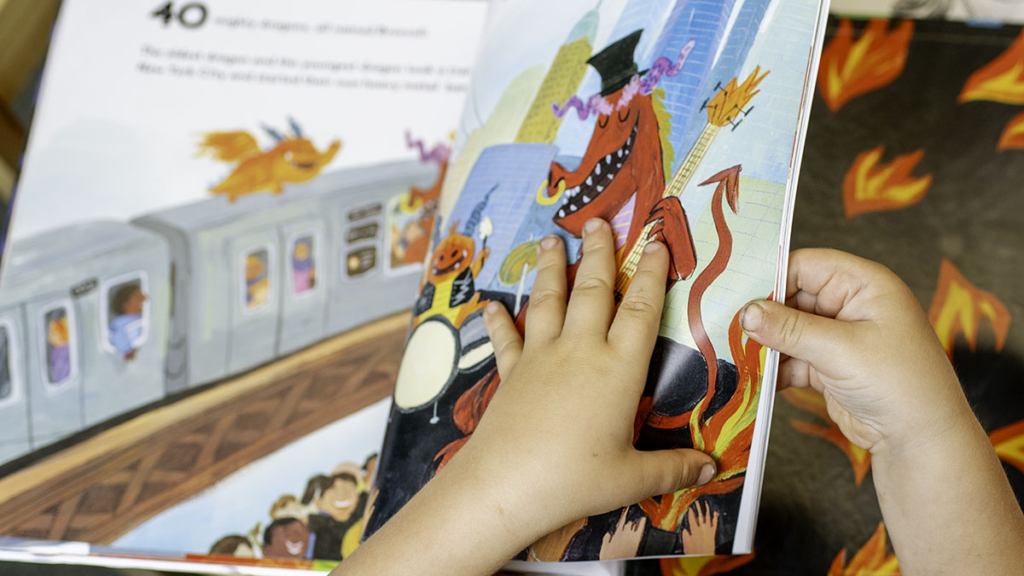
As districts move to replace the “whole language approach” to reading instruction with methods that are aligned to the Science of Reading, administrators have a fresh challenge on their hands: how to get rid of whole language for good.
Districts all across the country are doing the right thing by investing in High Quality Instructional Materials (HQIM) and implementing evidence-based Tier 1 curricula.
At the same time, college programs are still training future teachers to use disproven methods, and teaching websites are rife with supplemental materials based on discredited strategies. The result? There are still plenty of debunked instructional methods rearing their ugly heads in classrooms across the US.
How do you ensure traces of whole language instruction don’t linger in your classrooms as your district makes an instructional shift? If you’re serious about ensuring every student receives evidence-based reading instruction every time, start by looking for these tell-tale signs of whole language strategies.
What is the whole language approach to reading instruction?
The approach is widely credited to Kenneth Goodman, a professor at Michigan’s Wayne State University who is often called the father of whole language thanks to his 1967 paper published in the Journal of the Reading Specialist detailing his theory that reading was “a psycholinguistic guessing game.”
It wasn’t until the 1980s, however, that whole language truly took off in American classrooms. It was popularized by Marie Clay, the New Zealand teacher and researcher behind Reading Recovery©, a reading intervention used in schools across the U.S. to teach millions of American kids over the past four decades.
Whole language vs. the Science of Reading
Whole language proponents like Clay subscribe to the belief that learning to read is a natural process that can be taught in much the same way that kids learn to speak.
They take the constructivist view that exposing students to a print-rich environment with a lot of books is what will help them learn to read.
| Whole language | Balanced literacy | Science of Reading-aligned instruction | |
|---|---|---|---|
| How kids learn to read | Naturally, with enough exposure to books | Mostly naturally, with some phonics mixed in | Through explicit teaching that connects sounds to letters |
| How phonics is taught | Rarely, and only when it comes up in a book | In short mini-lessons, often without a set sequence | Systematically, following a planned scope and sequence |
| When a student gets stuck on a word | Check the picture, skip it, or guess what makes sense | Use meaning, structure and visual cues (three-cueing) | Look at every letter, sound it out, then check that it makes sense |
| Books beginning readers practice with | Predictable or self-selected books | Leveled “just right” books | Decodable texts that match the phonics already taught |
| What the research says | Not supported for teaching word reading | Phonics pieces help; cueing works against them | Backed by decades of converging research |
The Science of Reading tells us a very different story:
- Myriad studies, including a National Reading Panel review of more than 100,000 studies concerning how kids learn to read, have thoroughly refuted the idea that kids will learn to read through discovery alone and contradict the efficacy of whole language instruction.
Just 5 to 10 percent of kids learn to read easily, while the majority require explicit, systematic, and code-based instruction to master foundational reading skills. - A federally funded study of the efficacy of Reading Recovery© was released in 2022 and shows the long-term effect was detrimental to those learners. Kids who’d received the Reading Recovery© intervention in 1st grade had lower reading scores in 3rd and 4th grade than their peers.
Signs of whole language approach tactics in the classroom
A majority of districts have already adopted new curricula and paid for Science of Reading training. Walk into a K-3 classroom, though, and you may still hear a teacher tell a student to check the picture.
Why do these habits hang on? Part of the answer is where teachers learned to teach reading.
When the National Council on Teacher Quality reviewed about 700 teacher preparation programs in 2026, 53 percent earned an A for covering all five components of reading instruction without teaching discredited methods. That’s double the share from 2023, but about 1 in 5 programs still taught some outdated practices, including three-cueing. And many teachers in classrooms today finished their training long before those changes took hold.
Even programs that commit to the shift find old methods hiding in their own materials. After a state audit, Ohio State University spent a spring meeting with more than 30 faculty members to strip outdated practices from its reading courses. As one of the professors leading that work put it, the program “still had materials that had residual leftover from prior practices.” If a university with a dedicated team needs months to clear out three-cueing, it makes sense that the same leftovers turn up on classroom anchor charts and in book bins.
After 40 years of use in the classroom, it’s no surprise that whole language methods have not disappeared overnight, but it’s imperative that districts face the problem head-on to ensure the efficacy of the shift to Science of Reading-based instruction.
Here’s what to look for.
1. Sight word memorization
One of the cornerstones of the whole language approach is the use of rote memorization of sight words. Sometimes going by a variety of other names from star words to snap words, these words may even be incorporated into a classroom goal, such as “we will learn X number of sight words by the end of the school year.”
With the sight word approach to teaching kids to read, students are taught to recognize entire words from long lists instead of learning the letter sounds that come together to form each word.
Why it’s a problem
The Science of Reading has proven that students learn to read by mapping individual sounds (known as phonemes) to letters or groups of letters that represent them (known as graphemes). This process is called orthographic mapping, and it’s crucial to early reading skills development.
How orthographic mapping works
What it is
The mental process that lets readers store words in long-term memory, so they can recognize them instantly without sounding them out each time.
How it works
The brain links a word’s meaning and pronunciation to its individual sounds (phonemes), then to the letters that spell those sounds (graphemes).
-
“block”
1Meaning and pronunciation
-
/b/ /l/ /ŏ/ /k/
2Sounds (phonemes)
-
/b/b /l/l /ŏ/o /k/ck
3Spelling (graphemes)
Through repeated practice, students form this “map” in their brain which they will use for the rest of their lives, calling on the memory of how these phonemes and graphemes work together to automatically decode words as they read. Eventually, students will reach a point where a word can be recognized within a fourth of a second, not because the whole word was memorized but because the brain has “mapped” the way letters and sounds work together within words.
With this skill in hand, students don’t just know a list of memorized sight words. They’re able to apply these mapped rules to any word they encounter as they read.
This grapho-phonemic instruction has proven especially important for developing readers. Scientists found that if a teacher calls attention to the parts of words, rather than presenting words as whole entities, it helps students better learn to read and spell.
2. The 5 finger rule for reading and “just right” books
Because whole language proponents believe kids will naturally learn to read simply by being exposed to more books, it’s common for teachers in a whole language classroom to encourage students to select “just right books” to read on their own during an independent reading block.
These “just right books” are defined as books at a level that stretches their skills just a little but not enough to frustrate them. In the whole language classroom, this is referred to as an “instructional” level because it’s supposed to help students grow as readers, and kids learn to pick them using the “5 Finger Rule.”
First they select a book and open it to a random page. Students then read the page and hold up a finger for each word they don’t know. The rubric for this rule varies from classroom to classroom, but in general if students hold up 0 to 1 fingers, the book is ruled too easy. If they hold up 2 to 3 fingers, it’s considered “just right.”
How students sort books with the 5 finger rule
-
0 to 1 unknown words“Too easy”
-
2 to 3 unknown words“Just right”
-
4 to 5 unknown words“Too hard”
Why it’s a problem
Reading researchers have found more than a few problems with the use of just right books and the 5 finger rule.
- Studies show so-called instructional level texts don’t improve students’ decoding skills or build vocabulary. Not to be confused with grade level texts, which are written at a difficulty level that most students at a specific grade level can read and understand, these instructional level texts are meant to be slightly harder than what an individual student can read independently, based on their own skill level.
Research has shown kids benefit more from “frustration level” texts, in which they’ll encounter a significant number of unknown words (much more than 5!) and have more opportunities for greater learning. - Forcing kids to read books that fit the 5 finger rule limits their choices to a small selection, which can make reading frustrating and prevent them from finding joy in the act of reading.
Researchers have found that even 1st graders who have yet to develop their foundational reading skills are more likely to engage with books when they’re allowed to select books that interest them, rather than being forced to stick with books at their “instructional” level. - If a student is reading below grade level, being stuck reading books at their reading level means they miss out on the rich language, vocabulary, and knowledge that comes from reading more complex grade-level texts.
3. Independent reading blocks
One of the core tenets of whole language is the idea that learning to read is a natural process, and the more kids read, the better they get.
We know this isn’t how the brain works (reading researchers estimate as much as 90 percent of students (or more) will not learn to read without direct, explicit, systematic instruction), but it’s why independent reading blocks are common in whole language classrooms.
Before these blocks of time, teachers model “what good readers do,” then direct students to select books, typically using the 5 finger rule or similar methods to find their “just right” selection. Students then spend a portion of their literacy block with their chosen book, whether they have the skills to decode the words or not.
Why it’s a problem
Independent reading in and of itself is not a problem. The goal, after all, is for kids to read independently, optimally turning to a book on their own, outside of the classroom.
For kids who are still in the early stages of foundational reading skills development, however, free reading will not enhance those skills.
Simply put, kids do not learn to read simply by doing it.
Study after study (after study) has proven that the ability to read independently with proficiency is entirely dependent on a solid grounding in foundational reading skills like phonics, and the vast majority of kids require varied amounts of direct instruction and practice in order to develop these skills to the point of automaticity and fluency.
What’s more, independent reading blocks run the risk of worsening what’s known as the Matthew Effect in Reading, a theory developed by Canadian psychologist Dr. Keith Stanovich who found that early success in reading leads kids to read more while early difficulties in reading lead students to read less.
When they’re left to read on their own, students who are reading at or above grade level may benefit somewhat from the time, but those whose reading skills are below benchmark will instead become increasingly frustrated.
4. The skippy frog or skip the word, then come back
Another whole language-based strategy goes by the names “The Skippy Frog “Skippy the Frog,” or “Skip the Word, Then Come Back” in early grade classrooms.
You might spot this one on posters or anchor charts with images of kid-friendly animals. You may also hear it during a teacher observation, or spot it on materials in the classroom book nook or classroom library.
No matter the name, the concept is the same. When students encounter an unknown word, they’re taught to skip over it, reading the rest of the sentence before returning to the unidentified word. Students are then supposed to use context clues to guess what the unknown word could be.
Why it’s a problem
Skippy the Frog and Skip The Word, Then Come Back are just other names for the whole language strategy otherwise known as three-cueing.
Researchers have found the strategy can worsen reading difficulties for students because it takes readers’ attention away from the letters in a word and reduces the likelihood that they will map the spelling of the word to the spoken word in their memory bank.
5. The eagle eye
The Eagle Eye is another cutesy whole language-based mnemonic strategy that often pops up on classroom posters. Students are taught to decipher unknown words by using their “eagle eye” to look at pictures and other clues on the page to identify unknown words.

Why it’s a problem
Although slightly different in form from the word skipping strategy, the Eagle Eye is yet another version of the debunked three-cueing strategy.
6. Tryin’ lion
The name of the Tryin’ Lion mnemonic hits right at the heart of the problem with three-cueing. As the name implies, kids who encounter a word they can’t decode are taught to “try” different words in its place, literally to “guess” what word would fit.
Why it’s a problem
A student who guesses a word that fits the sentence may get the meaning right while skipping the step that builds reading skill: connecting each sound to its letters. A student who reads “horse” as “pony” understood the story but learned nothing about the word on the page.
Guessing also stops working as texts get longer and the pictures disappear, which is why many students who rely on it seem to hit a wall in the upper elementary grades.
7. Think of a word that might make sense
“Think of a Word That Might Make Sense” is another name for the Tryin’ strategy, albeit one that’s often used with older students who lack the foundational reading skills necessary to decode a word by sounding it out. Students are encouraged to guess a word that might make sense in the sentence.
Why it’s a problem
By the upper grades, guessing has often become a student’s main strategy. For a time, this can hide the child’s foundational reading skills gap even as it widens. A student who can’t decode a word like “investigation” may swap in something that “makes sense” and keep reading, so the error never shows up on a quick check. But as words become more complicated and text becomes more nuanced, these sorts of substitutions will no longer hold up.
These students need targeted instruction in breaking long words into decodable parts, not more practice guessing.
Your classroom walkthrough checklist
Bring this on your next round of observations. Each sign below pairs what you might spot on the walls or hear during a lesson with a replacement practice you can offer the teacher on the spot.
-
Sight word memorization
You might see or hearThe classroom has a “snap words” wall, students drill flashcards as whole shapes, or the class has a goal like “50 sight words by June.”
Try this insteadTeach high-frequency words by connecting each sound to its spelling, and mark only the irregular part to learn by heart.
-
The 5 finger rule and “just right” books
You might see or hearBook bins are labeled by level, and students hold up fingers to decide whether a book is a fit.
Try this insteadGive beginning readers decodable texts that match the phonics they’ve learned, and read rich grade-level books aloud to the whole class.
-
Independent reading blocks for beginning readers
You might see or hearKindergartners and 1st graders spend long stretches alone with books they can’t decode yet.
Try this insteadUse the time for partner reading of decodable texts with teacher feedback, and save longer independent reading for students who have cracked the code.
-
Skippy Frog, or “skip the word, then come back”
You might see or hearAn anchor chart shows a cartoon frog telling students to jump over a hard word and finish the sentence.
Try this insteadPrompt the student to look at every letter from left to right and blend the sounds before moving on.
-
Eagle Eye
You might see or hearA poster reminds students to check the picture for clues when they don’t know a word.
Try this insteadCover the illustration while students read the words, then talk about the picture together afterward.
-
Tryin’ Lion
You might see or hearThe teacher tells a stuck reader, “Try a word that starts with that letter and would fit here.”
Try this insteadAsk “What sound does each letter make?” and have the student blend from the start of the word to the end.
-
“Think of a word that might make sense”
You might see or hearOlder students are told to guess at long words based on the rest of the sentence.
Try this insteadTeach syllable types and show students how to break multisyllabic words into chunks they can decode.
Where are whole language methods banned?
Letting these strategies linger doesn’t just undercut the literacy plan your district has built. In a growing number of states, it can also put your schools out of compliance with the law.
More than 40 states now require schools to use evidence-based methods to teach reading, and many name three-cueing specifically.
The laws aren’t identical from state to state. Some ban three-cueing outright. Missouri’s 2025 law allows it as a supplement, as long as phonics makes up the majority of instruction. States are also still adding to the list: in February 2026, the Alabama House voted 98-0 to write the state board’s 2024 three-cueing ban into law.

Header image via Jeanne Sager Photography
Content updated